NATO Chief Scientist’s Reports
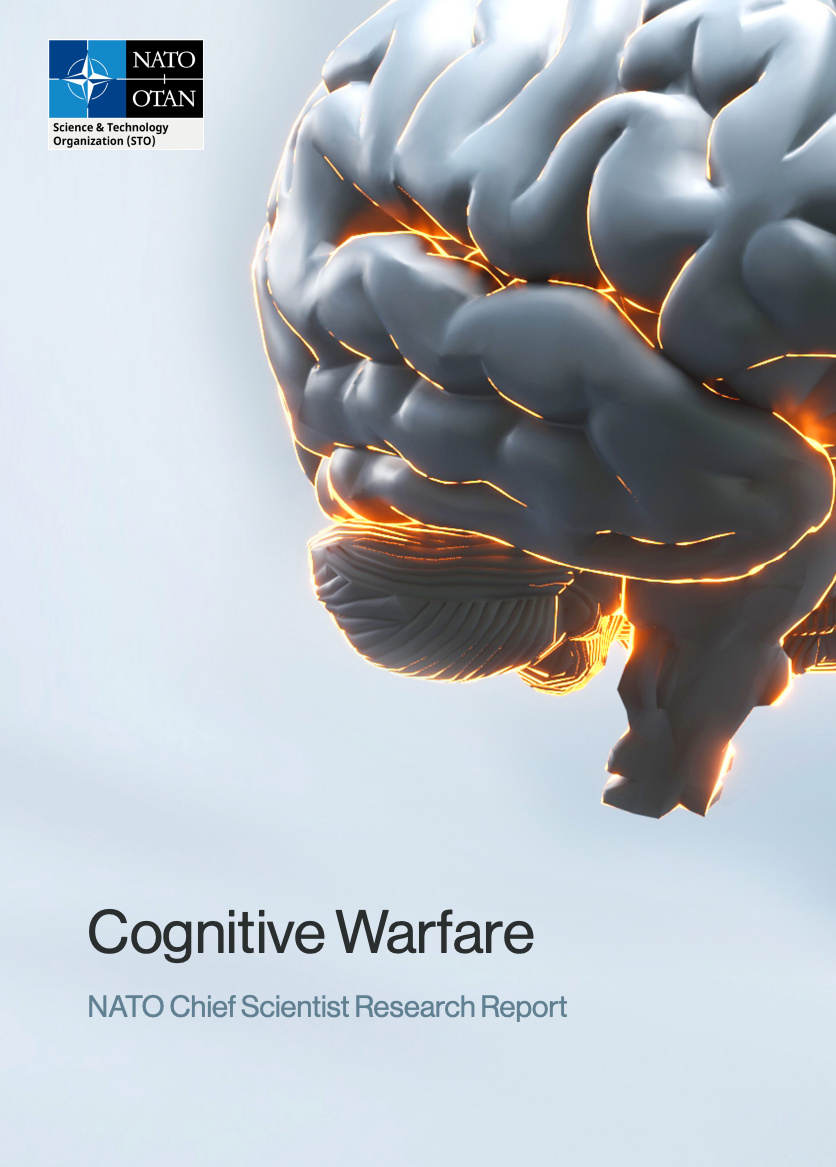
When we think about war, we still tend to picture physical space: territory, airspace, and weapons systems. Yet contemporary conflict increasingly extends beyond the physical battlespace — into how people perceive reality, interpret information, and make decisions under pressure. This shift sits at the centre of what NATO describes as Cognitive Warfare, as outlined in the NATO Chief Scientist Research Report on Cognitive Warfare.
Against this background, Anima’s inclusion in a volume of the NATO Science for Peace and Security Series marks an important transition: from a mental-health tool used in military and clinical contexts to a technology relevant for understanding cognitive security more broadly.
In the Chief Scientist’s report, Cognitive Warfare is not presented as a new battlefield alongside land, air, sea, or cyber. Instead, it is described as a cross-cutting dimension that affects all domains at once. Its focus is not infrastructure or territory, but cognition itself — attention, judgement, trust, and the conditions that enable sound decision-making.
The report emphasizes that practices such as deception, manipulation, and influence are not new. What has changed is their scale and precision. Digital platforms, artificial intelligence, and global information flows allow cognitive effects to spread rapidly and persistently, targeting both military personnel and civilian populations. The objective is often indirect: not immediate damage, but erosion — of confidence, coherence, and the ability to make sound decisions.
In this framing, cognitive strain is not a side effect of conflict; it is a strategic variable because degraded attention and judgement can ripple into coordination, risk assessment, and trust.
If Cognitive Warfare targets how people perceive and decide, a practical question follows: how can cognitive strain be detected before it becomes operationally consequential? This is where Anima enters the picture.
Since 2022, Anima has been used in operational military practice by psychologists working with Ukraine’s 3rd Assault Brigade, alongside standard validated questionnaires — effectively field-testing the approach under real-world conditions
Anima is not an influence system. It does not deliver messages, guide opinions, or attempt persuasion. Its function is more fundamental: it tracks how visual attention behaves under stress — a domain that often shifts before people can describe what is happening to them clearly. Research in cognitive and clinical psychology consistently shows that emotional states such as anxiety, depression, or extreme fatigue alter where people look, what they avoid, and how long their attention remains fixed on particular stimuli.
Using webcam-based eye tracking and artificial intelligence, Anima measures these patterns during natural tasks such as viewing images or reading text. From this data, it derives objective indicators related to attentional bias — including hypervigilance to threat, avoidance, dysphoria, and anhedonia — which are difficult to capture reliably through self-report alone.
Importantly, the NATO publication presents Anima not as a replacement for established psychological assessments, but as a complement. Questionnaires remain essential. Anima adds a behavioural signal that can be repeated frequently, does not depend on introspection, and remains sensitive even when individuals underreport or are unaware of changes in their own mental state.
One of the central themes in NATO’s Cognitive Warfare framework is resilience — the capacity to maintain or recover effective performance under cognitive pressure. From this perspective, tools like Anima serve a monitoring role rather than an operational one.
By identifying early shifts in attention, often preceding conscious symptoms, Anima helps professionals understand when cognitive resources are being stretched, distorted, or depleted. In military contexts, this has direct relevance for readiness, recovery, and sustained performance. In civilian and societal contexts, it points to a broader concern: how prolonged informational pressure can degrade judgement and collective decision-making. In practical terms, Anima makes cognitive strain visible before it becomes damage.



